How Many Pages Is 6000 Words? Charts for Essays & Books
Your assignment says 6,000 words, and your brain wants a page number. The standard answer is simple: about 12 pages single-spaced, or about 24 pages double-spaced. But that answer only holds when your font, size, spacing, and margins match the standard format, and a 6,000-word essay, a 6,000-word report, and 6,000 words in a printed book are three different page counts. Here are the charts for each one, and what moves the number.
Quick answer
6,000 words is about 12 pages single-spaced or about 24 pages double-spaced, using 12-point Times New Roman or Arial with 1-inch margins. A single-spaced page holds roughly 500 words, and a double-spaced page holds roughly 250 words. At 1.5 spacing the same text fills about 16 pages. Change the font, the font size, the margins, or the spacing, and the page count moves with them, so always check your assignment format before you trust any chart.
Pages by spacing
Spacing is the biggest lever on page count. It does not change a single word of your text, yet it can double the length of your document. That is why teachers and editors state spacing in the assignment, and why a chart without a spacing column is useless.
| Spacing | Words per page (approx.) | 6,000 words |
|---|---|---|
| Single-spaced | 500 | About 12 pages |
| 1.5 spacing | About 375 | About 16 pages |
| Double-spaced | 250 | About 24 pages |
The math is simple division. Take your word count, divide it by the words per page, and you get the page count. For 6,000 words that means 6,000 divided by 500 is 12 single-spaced pages, and 6,000 divided by 250 is 24 double-spaced pages. At 1.5 spacing, 6,000 divided by about 375 gives about 16 pages. Keep the formula in your head and you can estimate any word count in seconds, without opening a converter.
These figures assume continuous body text. Headings, lists, block quotes, tables, and images all eat page space without adding many words, so a real essay with several headings often runs a little longer than the chart says. The reverse is also true: long unbroken paragraphs pack slightly more words per page than a document broken into many short sections. A 6,000-word essay with a heading every few paragraphs can easily land at 25 or 26 double-spaced pages instead of exactly 24, and that is normal.
If your assignment gives a page count instead of a word count, work backwards with the same math. Twenty-four double-spaced pages means roughly 6,000 words, and twelve single-spaced pages means the same. Then aim a little over, not under, because trimming is easier than stretching a short draft at the last minute. If you are working from a smaller target, our guides to how many pages 500 words fills, 1,000 words, and 2,000 words use the same math and the same standard format.
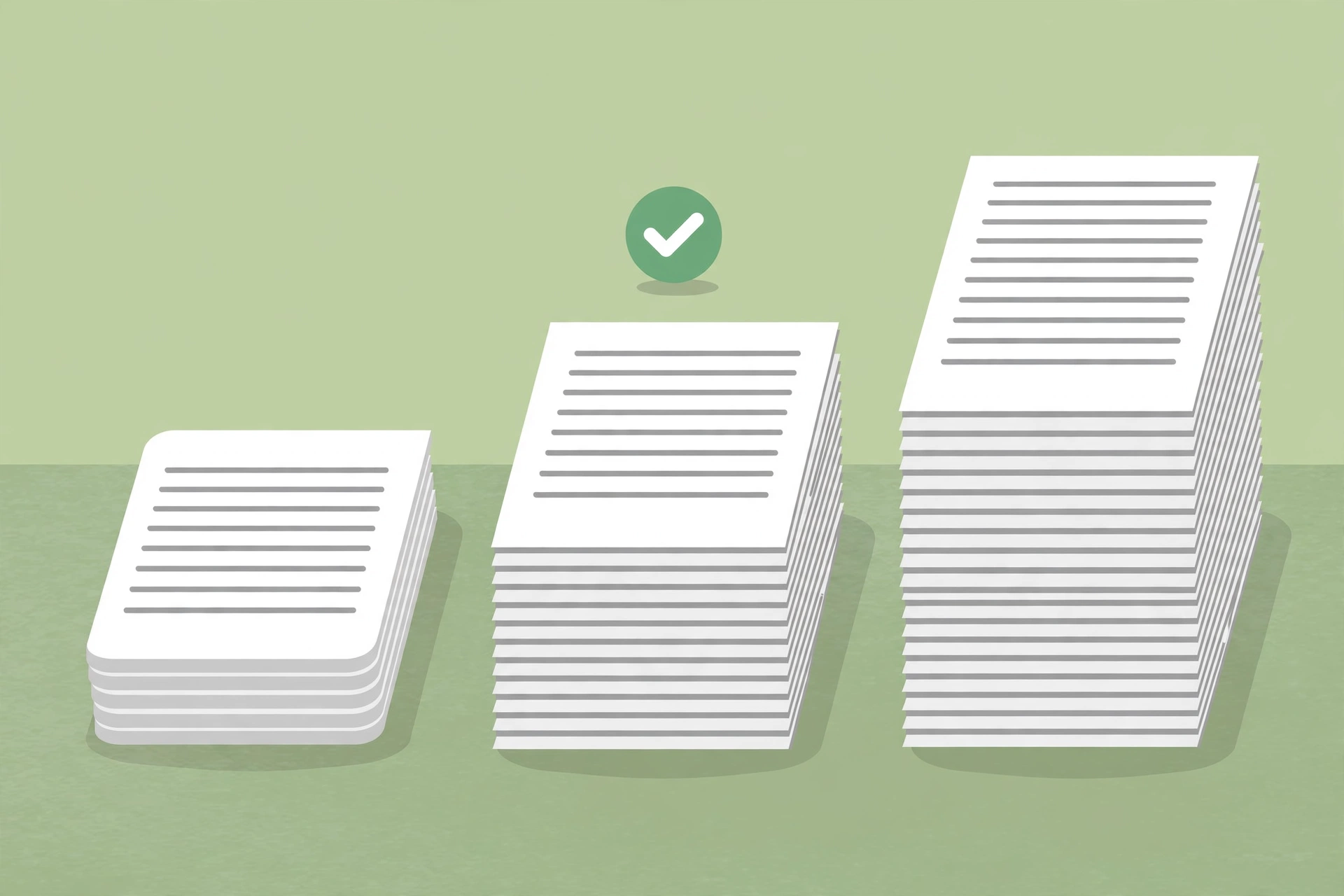
How 6,000 words compares with other word counts
A 6,000-word assignment is a long one. Most undergraduate essays run between 1,500 and 3,000 words, so 6,000 words is roughly double a typical essay, and it sits in the range of a term paper, a dissertation chapter, or a long research report. Seeing it next to smaller counts makes the scale clear.
| Word count | Single-spaced | Double-spaced |
|---|---|---|
| 1,000 words | About 2 pages | About 4 pages |
| 2,000 words | About 4 pages | About 8 pages |
| 3,000 words | About 6 pages | About 12 pages |
| 4,000 words | About 8 pages | About 16 pages |
| 5,000 words | About 10 pages | About 20 pages |
| 6,000 words | About 12 pages | About 24 pages |
| 10,000 words | About 20 pages | About 40 pages |
Every row in this table uses the same standard format: 12-point Times New Roman or Arial, 1-inch margins, about 500 words per single-spaced page and about 250 per double-spaced page. If your format changes, every row moves together. That is the point of the table. Once you know the words per page for your format, the whole ladder follows from one division.
6,000 words by document type
The same 6,000 words look different in different documents, because each type brings its own format and its own extras. A student essay, a business report, a blog post, and a book chapter all count words the same way, but they do not fill pages the same way.
College essay or term paper. This is the classic case: 12-point Times New Roman, double-spaced, 1-inch margins, MLA or APA style. Expect about 24 pages of body text, plus a title page and a references page that do not count toward the body total in most courses. Check whether your course counts the references page, because that single rule changes the target. A 6,000-word term paper is a serious piece of work, so plan it in sections. An introduction, four or five body sections, and a closing section keep a document this long readable, and each section becomes a smaller writing job of its own.
Business report. Reports usually run single-spaced with headings, tables, and charts. Body text of 6,000 words lands near 12 pages, but tables and charts push the file longer fast. A report with six tables and four charts can easily reach 18 or 20 pages total while the word count stays at 6,000. Report the word count and the page count separately when you hand it in, so nobody mistakes chart pages for missing text. If your report is a PDF and it grows too large to send, the Compress PDF tool shrinks it in your browser.
Blog post or online article. Web writing uses shorter paragraphs, more headings, and images, so 6,000 words on screen feels much longer than 6,000 words in a Word file. In print terms it is still about 12 single-spaced pages, but readers scroll past images and subheadings that add screen length without adding words. For a blog, word count matters more than page count, because nobody prints the post. A 6,000-word post is a long guide or a deep review, not a quick news item, so break it up with headings every few hundred words or readers will leave before they reach the end.
Book chapter or manuscript. Manuscripts often use double spacing for editing, so 6,000 words is about 24 manuscript pages. Published books are a different story. A 6 by 9 inch paperback holds roughly 300 words per page, so 6,000 words fills about 20 printed pages. A smaller 5.5 by 8.5 inch book holds about 275 words per page, which gives about 22 pages, and a 5 by 8 inch book holds about 250 words per page, which gives about 24 pages. Do not use manuscript pages to estimate a printed book, or the reverse. The two page types hold different amounts of text, and mixing them up is the most common mistake new authors make when they plan a book.
One practical note for authors: Amazon KDP needs at least 24 pages for a paperback, so 6,000 words of body text alone, at about 20 pages in a 6 by 9 inch book, falls short of a standalone paperback. It works well as an ebook, a lead magnet, or a single chapter, and it reaches the minimum once you add front matter, chapter openings, and back matter. If you are planning a short book, check the page math before you set the trim size, because a smaller trim size means more pages for the same words.
What changes the page count
Four settings decide how many words fit on a page. Learn them once, and you will never be surprised by a page count again.
Font choice. Times New Roman and Arial at 12 points give the standard counts above. Calibri runs a touch narrower, so the same text may land just under 24 double-spaced pages. Courier New is the outlier: every character takes the same width, so it fits far fewer words per line, and a 6,000-word essay in Courier New can stretch to about 21 single-spaced pages or about 41 double-spaced pages. That trick used to fool page counts, and most instructors now name an approved font for exactly that reason. If your assignment does not name a font, Times New Roman is the safe default.
| Font (12pt) | Single-spaced | Double-spaced |
|---|---|---|
| Times New Roman | About 12 pages | About 24 pages |
| Arial | About 12 pages | About 24 pages |
| Calibri | About 12 pages | About 24 pages |
| Courier New | About 21 pages | About 41 pages |
Font size. Dropping from 12 points to 11 points packs noticeably more words per page, and 10 points packs more again. Going the other way, 14-point text for a presentation handout or a large-print draft can push 6,000 words well past 30 double-spaced pages. If your format does not name a size, 12 points is the safe default, and changing the size to reach a page count is a bad idea. Readers notice, and most formats forbid it.
Margins. One-inch margins on all sides are the academic standard. Wider margins shrink the printable area, so fewer words fit per page. A 1.25-inch margin setup, still used in some older department styles, drops a double-spaced page from about 250 words toward about 220, which turns 6,000 words into about 27 double-spaced pages. Narrow margins do the opposite, which is why a business report with half-inch margins looks much shorter than the same text in an essay format.
Paragraph breaks and headings. Every heading, subheading, list, and blank line between paragraphs costs lines. A document with a heading every few paragraphs and generous paragraph spacing will run longer than the chart predicts. None of this is cheating or padding. It is normal document structure, and it is the main reason two students with the same word count hand in different page counts. At 6,000 words, with dozens of paragraphs and several sections, the gap between two students can easily be two or three pages.
6,000 words in MLA, APA, and Chicago format
The three big academic styles agree on the basics, and that is good news. MLA, APA, and Chicago all call for double spacing, 12-point Times New Roman, and 1-inch margins on all sides. Purdue University's Online Writing Lab, the free reference most instructors point students to, states the same general format for MLA and APA: standard paper, 1-inch margins, a readable 12-point font, and double spacing throughout. That means a 6,000-word paper is about 24 pages of body text in any of the three styles.
The differences sit outside the body text. MLA puts your name, your instructor's name, the course, and the date on the first page, above the title, and it does not usually need a separate title page. APA uses a separate title page with the title, your name, your department and university, the course, the instructor, and the due date. Chicago has its own title page rules and its own notes system. None of those pages count as body pages in most courses, so a 24-page body can arrive as a 26-page file once the title page and the references or Works Cited page are added. Ask your instructor which pages count before you cut good paragraphs to hit a target that never included them.
APA has one more detail worth knowing. The current APA style allows a few font choices, including 11-point Calibri or Arial and 11-point Georgia, alongside 12-point Times New Roman. If your instructor allows 11-point Calibri, the same 6,000 words will land a little under 24 pages, because the smaller type fits more words per page. That is not a loophole. It is the format working as written, and your instructor chose it on purpose.
Chicago is the style most likely to surprise you. Its notes and bibliography system means footnotes or endnotes take up page space of their own, and a paper with many notes runs longer than the same text in MLA or APA. Block quotes in Chicago are single-spaced, which pulls the count back the other way. If your paper has heavy notes, check the real page count in Word rather than trusting the chart.
Handwritten 6,000 words
Handwriting is harder to predict, because hand size varies so much. As a rough guide, average handwriting fills about 200 to 250 words per page on lined paper, which puts 6,000 words near 24 to 30 pages, much like a double-spaced typed essay. Large handwriting drops to about 200 words per page, pushing the same text toward 30 pages. Small, tight handwriting can reach 300 words per page, bringing it closer to 20 pages.
Ruled paper matters too. Wide-ruled paper gives fewer lines per page than college-ruled paper, so the same handwriting fills more pages on wide-ruled sheets. If a handwritten assignment states a page count, write one full page first, count its words, and multiply. That single test page beats every chart, because it measures your hand, your pen, and your paper.
For exams, do not plan on handwriting speed matching typing speed. Most people write far fewer words by hand in the same time, so a 6,000-word handwritten answer is a very long exam, not a quick one. A 6,000-word handwritten assignment is usually a take-home task spread over days, and it deserves the same outline and section plan as a typed paper of the same length.
How long does 6,000 words take to read and write?
Page count tells you how long a document looks. Reading time tells you how long it takes to get through it. At an average silent reading speed of 238 words per minute, 6,000 words takes about 25 minutes to read. Reading the same text aloud takes about 33 minutes, since most people speak more slowly than they read silently, at around 183 words per minute. Dense academic text takes longer than either figure, because you slow down to follow the argument, check a citation, or reread a hard paragraph. If you want the read-aloud time for a talk instead, our guide to how many words fit a 5-minute speech shows how speaking pace changes the math.
Writing 6,000 words takes far longer than reading it. Planning and drafting an essay of this length usually takes several hours spread over more than one sitting, including research, outlining, and editing. Typing speed alone is a poor guide, since thinking, checking sources, and revising take most of the time. A realistic plan is to outline on day one, draft two or three sections a day, and leave a full session for editing at the end. Trying to write all 6,000 words in one sitting usually produces a weaker draft, and it leaves no time to fix the problems you only notice on a second read.
Paragraph count helps with planning too. If a typical paragraph runs 150 to 200 words, 6,000 words works out to roughly 30 to 40 paragraphs. Short web-style paragraphs push the count higher, and long academic paragraphs push it lower. Use the paragraph count to split the work into chunks, not as a rule to obey. An introduction of three paragraphs, five body sections of five or six paragraphs each, and a closing section of three paragraphs gets you to 6,000 words with room to spare, and each chunk is a writing session you can finish in one sitting.
Check your own page count
Charts are planning tools. Your own document is the truth. Check it in under a minute.
- In Word, look at the status bar. The bottom left shows the word count and the page count as you type. Open Review, then Word Count, for the full breakdown. Our guide to word count in Microsoft Word shows every route, including the shortcut.
- In Google Docs, use Tools, then Word count. Docs shows words and pages in one small box. Our Google Docs word count guide covers what Docs leaves out.
- Cross-check with a counter. Paste your text into the free Word Counter on this site and read words, sentences, paragraphs, and reading time live as you type. If Word and the counter disagree, check for footnotes, text boxes, or selected text first, since those are the usual causes.
When you check, confirm the format first: font, size, spacing, and margins. A count taken in the wrong format answers a different question from the one your assignment asked. Fix the format, then read the number. And check the count twice: once when the draft is done, and once after your final edit, because a heavy edit can move the word count by hundreds of words in either direction.
Common mistakes and fixes
Trusting a chart without checking the format. A chart that assumes double spacing is wrong for a single-spaced report. Read the spacing row first, then the page number. At 6,000 words, the wrong row costs you 12 pages, not one or two.
Counting the title and references pages as body pages. Many courses exclude them. Ask, or read the assignment sheet, before you cut good paragraphs to hit a page target that never included those pages.
Padding with wide spacing or a big font to reach a page count. Readers notice, and many formats forbid it. Add a real section, an example, or a counterpoint instead. It reads better and it survives a format check. With 6,000 words you have room for a genuine extra section, so use it.
Treating pages and words as the same requirement. They measure different things. A 6,000-word limit with a 24-page format is one requirement, not two, and meeting the page count in the wrong format does not meet the word count. If your instructor set a word count, the word count is the rule.
Forgetting images and tables. A chart page counts as a page but adds few words. If your document has several figures, the page count will run ahead of the word count, and that is normal. Count the figures separately when you plan the length.
Mixing up manuscript pages and printed book pages. A 6,000-word manuscript is about 24 double-spaced pages, but the same text is only about 20 pages in a 6 by 9 inch paperback. Use manuscript numbers for editing and book numbers for printing, and never use one to plan the other.
Frequently asked questions
How many pages is 6,000 words double-spaced?
About 24 pages, using 12-point Times New Roman or Arial with 1-inch margins. A double-spaced page holds roughly 250 words, so 6,000 divided by 250 gives 24. Headings, lists, and paragraph breaks can push the real total a page or two higher.
How many pages is 6,000 words single-spaced?
About 12 pages, using 12-point Times New Roman or Arial with 1-inch margins. A single-spaced page holds roughly 500 words, so 6,000 divided by 500 gives 12. Reports with tables, charts, and images run longer in total pages, even though the word count stays the same.
How many pages is 6,000 words in MLA format?
About 24 pages of body text. MLA format uses 12-point Times New Roman, double spacing, and 1-inch margins, which gives roughly 250 words per page. The Works Cited page sits outside the body count, so confirm with your instructor whether it counts toward your total.
How many pages is 6,000 words in a book?
About 20 to 24 printed pages, depending on the trim size. A 6 by 9 inch paperback holds roughly 300 words per page, so 6,000 words fills about 20 pages. A smaller 5.5 by 8.5 inch book holds about 275 words per page, which gives about 22 pages of text.
How many paragraphs is 6,000 words?
Roughly 30 to 40 paragraphs, if a typical paragraph runs 150 to 200 words. Short web-style paragraphs push the count higher, and long academic paragraphs push it lower. Paragraph count is a planning aid only, and no instructor should grade your essay by counting paragraphs.
How long does it take to read 6,000 words?
About 25 minutes at an average silent reading speed of 238 words per minute. Reading the same text aloud takes about 33 minutes, since most people speak more slowly than they read silently. Dense academic text takes longer, because you slow down to follow the argument.
Try the free counter
Start with the chart: 12 pages single-spaced, 24 pages double-spaced, 16 pages at 1.5 spacing, and about 20 pages in a 6 by 9 inch paperback. Then open your own document, confirm the font, size, spacing, and margins match your assignment, and read the real number. The chart gets you close, and your document gets you exact.
When you need the word count itself, open the free Word Counter, paste your text, and read words, sentences, paragraphs, and reading time as you type, with no signup. Use it to check a draft before you format it, and again after, since formatting never changes the words but always changes the pages. If you are working from a shorter draft and building up, our guides to 1,000 words and 2,000 words use the same math, and word count vs character count explains what each number actually measures.
How we tested this: we checked the page-count figures against published words-to-pages guides found during research, including Word Count Tool's guide to 6,000 words, which gives the same 12-page single-spaced and 24-page double-spaced figures for 12-point Times New Roman or Arial, and WordCounter's 6,000-word FAQ, which agrees. The MLA and APA format rules follow Purdue OWL, the reading times come from a reading time calculator that uses 238 words per minute for silent reading and 183 for reading aloud, and the book page figures come from a word count to pages converter that uses about 300 words per 6 by 9 inch paperback page. We also read the Word Counter tool page on this site to confirm it shows words, sentences, paragraphs, and reading time live as you type. Figures here are planning estimates for standard formats, not exact counts for any one document.
Privacy note: the Word Counter on this site needs no account and no signup. The tool page states that your text is processed in your browser and never uploaded or stored, so a draft essay is not sent to a server to be counted.
Last updated: November 10, 2026